
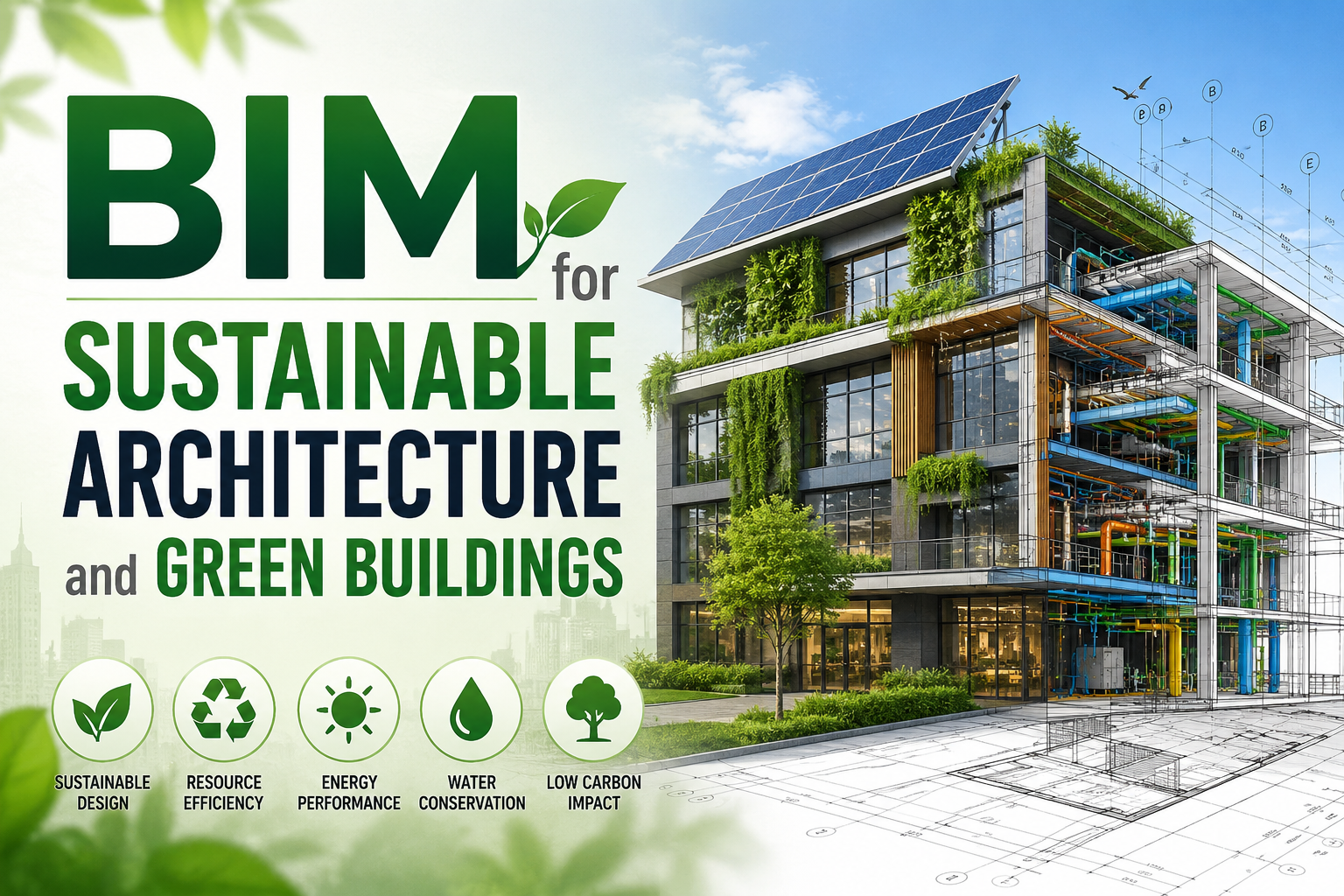
Sustainability is no longer a niche consideration in modern construction—it has become a fundamental design priority. As cities expand and environmental concerns intensify, architects, engineers, and developers are increasingly adopting Building Information Modeling (BIM) to create energy-efficient, resource-conscious, and environmentally responsible structures. BIM is not just a digital design tool; it is a comprehensive process that integrates data, design, analysis, and collaboration to support the development of sustainable architecture and green buildings.
Understanding BIM in the Context of Sustainability
Building Information Modeling (BIM) is a digital representation of the physical and functional characteristics of a building. It enables stakeholders to visualize, simulate, and analyze a project throughout its lifecycle—from conceptual design to demolition. In sustainable architecture, BIM serves as a powerful platform for making informed decisions that minimize environmental impact.
Unlike traditional design methods, BIM allows real-time integration of environmental data such as energy consumption, daylight availability, material performance, and carbon emissions. This data-driven approach ensures that sustainability is embedded into the project from the earliest stages rather than being treated as an afterthought.
Role of BIM in Green Building Design
Green buildings aim to reduce resource consumption, improve energy efficiency, and enhance occupant well-being. BIM supports these goals by enabling a holistic design approach.
Energy Analysis and Optimization
One of the most significant contributions of BIM is its ability to perform detailed energy simulations. Designers can evaluate heating, cooling, ventilation, and lighting systems within the model to determine optimal configurations. By analyzing different design alternatives, BIM helps reduce energy consumption and improve building performance before construction begins.
Daylighting and Solar Studies
BIM tools allow architects to simulate natural light penetration and solar radiation. This helps in optimizing window placement, shading devices, and building orientation. Effective daylighting reduces reliance on artificial lighting, leading to energy savings and improved indoor comfort.
Material Selection and Lifecycle Assessment
Sustainable construction depends heavily on the choice of materials. BIM enables detailed material tracking, including information about embodied energy, recyclability, and environmental impact. Lifecycle assessment (LCA) tools integrated with BIM help in selecting materials that minimize carbon footprint over the building’s lifespan.
Enhancing Collaboration for Sustainable Outcomes
Sustainability requires coordination among multiple disciplines, including architecture, structural engineering, and MEP (Mechanical, Electrical, and Plumbing) systems. BIM facilitates seamless collaboration by providing a centralized platform where all stakeholders can work on a shared model.
This collaborative environment reduces errors, minimizes rework, and ensures that sustainability goals are consistently maintained across all project phases. Clash detection features in BIM further help in identifying and resolving design conflicts early, reducing material waste and construction delays.
BIM and Energy-Efficient Building Systems
BIM plays a critical role in designing and optimizing building systems that directly impact energy consumption.
HVAC System Optimization
Heating, ventilation, and air conditioning (HVAC) systems are among the largest energy consumers in buildings. BIM enables detailed modeling and simulation of HVAC systems, allowing engineers to design efficient layouts, select appropriate equipment, and reduce energy loads.
Renewable Energy Integration
BIM supports the integration of renewable energy systems such as solar panels, wind turbines, and geothermal systems. By simulating energy generation and consumption, BIM helps determine the feasibility and efficiency of renewable solutions within the building design.
Waste Reduction and Resource Efficiency
Construction waste is a major environmental concern. BIM helps address this issue by improving planning, accuracy, and resource management.
Supporting Green Building Certifications
BIM plays a vital role in achieving green building certifications such as LEED (Leadership in Energy and Environmental Design), BREEAM, and IGBC ratings. It simplifies documentation and ensures compliance with sustainability criteria.
With BIM, project teams can track energy performance, water usage, material sourcing, and indoor environmental quality—all of which are essential for certification. Automated reporting features further streamline the certification process.
Lifecycle Management and Facility Operations
Sustainability extends beyond design and construction—it includes the operation and maintenance of buildings. BIM supports lifecycle management by providing a digital twin of the building that can be used for facility management.
Challenges in Implementing BIM for Sustainability
Despite its advantages, implementing BIM for sustainable architecture comes with challenges:
However, these challenges are gradually being overcome as the construction industry recognizes the long-term benefits of BIM.
Future of BIM in Sustainable Architecture
The future of BIM is closely linked with emerging technologies such as artificial intelligence (AI), Internet of Things (IoT), and digital twins. These technologies will further enhance BIM’s capabilities in sustainability.
As environmental regulations become stricter and sustainability becomes a global priority, BIM will play an increasingly central role in shaping the built environment.
Conclusion
BIM has transformed the way sustainable architecture and green buildings are designed, constructed, and operated. By integrating data, enhancing collaboration, and enabling advanced simulations, BIM ensures that sustainability is embedded throughout the building lifecycle. From energy efficiency and material optimization to waste reduction and lifecycle management, BIM provides a comprehensive framework for achieving environmentally responsible construction.
In a world where sustainability is no longer optional, BIM stands out as a critical tool that bridges the gap between innovative design and practical implementation, paving the way for a greener and more sustainable future.
FAQ’s
1. What is the role of BIM in sustainable architecture?
Building Information Modeling (BIM) plays a crucial role in sustainable architecture by enabling designers to create data-rich digital models that simulate a building’s performance before construction. BIM helps analyze energy consumption, daylighting, material efficiency, and carbon impact, allowing architects and engineers to make environmentally responsible decisions early in the design process.
2. How does BIM help improve energy efficiency in green buildings?
BIM tools allow for detailed energy analysis by integrating building geometry, climate data, and material properties. Designers can simulate heating, cooling, and lighting loads to optimize energy performance. This leads to better insulation choices, efficient HVAC system design, and reduced operational costs, all of which contribute to energy-efficient green buildings.
3. Can BIM support green building certifications like LEED?
Yes, BIM significantly supports green building certifications such as LEED. BIM helps track sustainability metrics like energy use, water efficiency, and material sourcing. It also simplifies documentation and reporting required for certification, making the process more streamlined and accurate.
4. How does BIM contribute to material sustainability?
BIM enables precise quantity takeoffs and material tracking, reducing waste during construction. It allows designers to select eco-friendly and locally sourced materials while analyzing their lifecycle impact. This reduces the overall carbon footprint and promotes sustainable resource management throughout the project.
5. What are the long-term benefits of using BIM in green buildings?
The long-term benefits of BIM include improved building performance, lower energy and maintenance costs, and better facility management. BIM models can be used throughout the building lifecycle, helping owners monitor systems, plan maintenance, and optimize operations, ensuring that sustainability goals are maintained even after construction.

Send us
drawings and scope
Click the link below and send us your complete scope and drawings. We will provide quote/proposal in 24 to 48 hours.
 301-774-0880
