
3D Modeling of Structure: Structural BIM Services
Introduction
The construction industry has undergone a remarkable digital transformation over the last decade, and Building Information Modeling (BIM) has emerged as one of the most influential technologies driving this change. At the core of Structural BIM Services lies 3D structural modeling, a process that creates an intelligent digital representation of a building’s structural framework. Unlike traditional 2D drawings, 3D structural models contain detailed information about structural elements, their geometry, material properties, and relationships with other building components.
Today, architects, engineers, contractors, and project owners rely on 3D structural m
odels to improve design accuracy, enhance collaboration, reduce construction errors, and streamline project execution. From residential buildings and commercial complexes to industrial facilities and infrastructure projects, 3D modeling has become an essential part of modern construction workflows.
What is 3D Modeling of Structure?
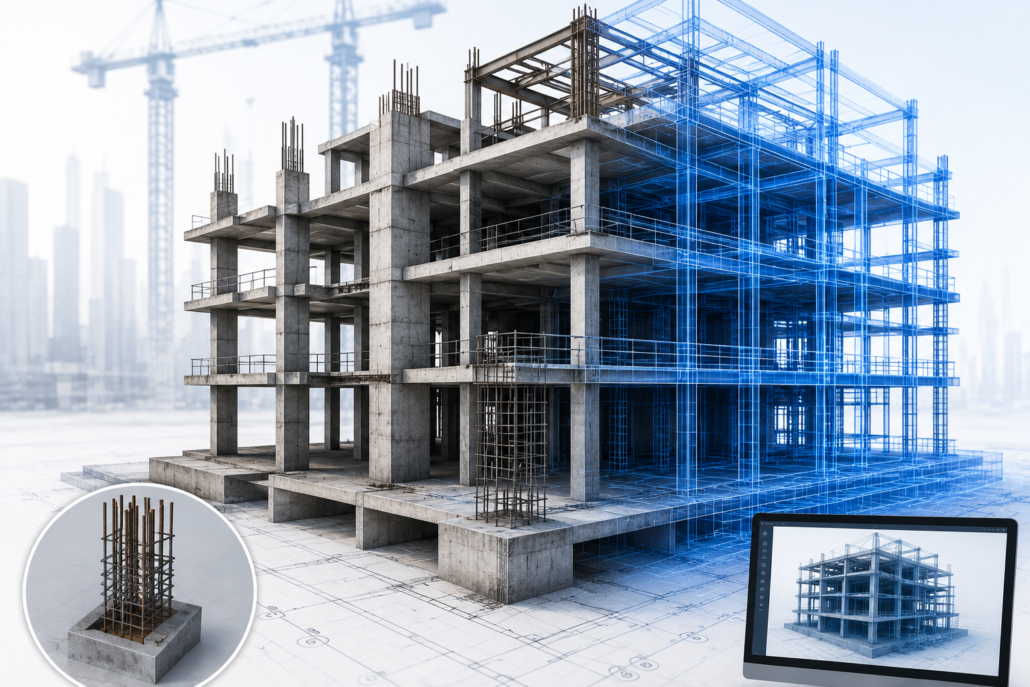
3D structural modeling is the process of creating a digital three-dimensional representation of a building’s structural system using BIM software. The model includes all major structural components such as foundations, columns, beams, slabs, walls, trusses, braces, staircases, and steel members.
Unlike conventional CAD drawings, BIM-based structural models are intelligent and data-rich. Each component contains valuable information regarding dimensions, material specifications, reinforcement details, load-bearing capacity, fabrication requirements, and construction sequencing.
The primary objective of structural 3D modeling is to provide a realistic and accurate virtual representation of the structure before physical construction begins. This allows project stakeholders to visualize, analyze, coordinate, and optimize structural designs throughout the project lifecycle.
Importance of 3D Structural Modeling in BIM
3D structural modeling serves as the backbone of Structural BIM Services. It enables engineers and construction professionals to identify design issues early, minimize rework, and improve project coordination.
One of the most significant advantages of 3D modeling is its ability to provide clear visualization. Complex structural systems that may be difficult to understand through 2D drawings become easier to interpret in a three-dimensional environment. Engineers can review structural arrangements from different angles and verify design intent more effectively.
Additionally, BIM models facilitate better communication among project stakeholders. Architects, structural engineers, MEP consultants, contractors, and owners can collaborate using a shared model, ensuring that everyone works with consistent and updated project information.
Key Components Included in Structural 3D Models
A comprehensive structural BIM model typically incorporates numerous structural elements, including:
Foundations
Foundation systems such as isolated footings, combined footings, raft foundations, pile caps, and retaining structures are accurately modeled to represent the building’s load transfer system.
Columns
Columns form the vertical load-bearing framework of a structure. The model includes dimensions, material specifications, elevations, and connection details.
Beams
Structural beams are modeled with precise geometry and positioning to support floors, roofs, and other structural components.
Slabs
Floor slabs, roof slabs, podium decks, and elevated platforms are incorporated into the model with accurate thickness and reinforcement information.
Structural Walls
Load-bearing walls, shear walls, retaining walls, and core walls are represented in detail to support structural analysis and construction planning.
Steel Structures
Steel columns, beams, trusses, bracings, gusset plates, and connections are modeled to facilitate fabrication and erection activities.
Reinforcement Elements
For reinforced concrete structures, rebar modeling may be integrated into the structural BIM model to improve construction accuracy and quantity estimation.
Process of Creating a Structural 3D BIM Model
The development of a structural BIM model follows a systematic workflow.
Data Collection
The process begins with gathering architectural drawings, structural calculations, design specifications, survey information, and project requirements.
Model Development
Using BIM software such as Revit, Tekla Structures, or Bentley applications, structural engineers create a detailed digital representation of the structural framework.
Coordination and Clash Detection
The structural model is coordinated with architectural and MEP models to identify clashes and design conflicts before construction begins.
Quality Review
Engineers perform thorough quality checks to ensure compliance with project standards, design requirements, and BIM execution plans.
Documentation Generation
The finalized model is used to generate structural drawings, schedules, quantity takeoffs, and fabrication documents.
Benefits of 3D Modeling in Structural BIM Services
Enhanced Visualization
Three-dimensional models provide realistic project visualization, allowing stakeholders to understand structural configurations more effectively than traditional drawings.
Improved Design Accuracy
Model-based workflows reduce drafting errors and improve consistency across structural documentation.
Better Coordination
Integration with architectural and MEP disciplines helps identify clashes early in the design phase, reducing costly site modifications.
Faster Project Delivery
Automated documentation and streamlined workflows significantly improve project efficiency and reduce design timelines.
Reduced Rework
Early issue detection minimizes construction errors, saving time, labor, and material costs.
Accurate Quantity Takeoffs
The model enables precise material quantity calculations, supporting procurement and cost estimation activities.
Improved Construction Planning
Contractors can use the model for sequencing, site logistics, and constructability reviews, resulting in smoother project execution.
Software Used for Structural 3D Modeling
Several advanced BIM platforms are commonly used for structural modeling:
- Autodesk Revit Structure.
- Tekla Structures.
- Bentley ProStructures.
- Autodesk Advance Steel.
- Allplan Engineering.
- Autodesk Robot Structural Analysis.
- Navisworks for coordination and clash detection.
These software solutions support model creation, analysis, detailing, coordination, and documentation within a unified BIM workflow.
Applications of Structural 3D Modeling
Structural BIM models are widely used across various project types, including:
- Residential buildings.
- Commercial complexes.
- Hospitals.
- Educational institutions.
- Industrial facilities.
- Warehouses.
- Airports.
- Railway stations.
- Bridges.
- Infrastructure projects.
- High-rise towers.
The versatility of BIM-based structural modeling makes it suitable for projects of all sizes and complexities.
Future of Structural 3D Modeling
As the construction industry continues to embrace digital technologies, structural 3D modeling is evolving beyond visualization and documentation. Integration with artificial intelligence, digital twins, cloud collaboration platforms, reality capture technologies, and construction automation is expanding the capabilities of BIM.
Future structural models will serve as dynamic information hubs throughout the building lifecycle, supporting design, construction, facility management, maintenance, and renovation activities. Organizations that adopt advanced Structural BIM Services will gain significant advantages in project efficiency, quality control, and long-term asset management.
Conclusion
3D modeling of structure is a fundamental component of modern Structural BIM Services. By creating intelligent digital representations of structural systems, BIM enables greater design accuracy, improved coordination, enhanced visualization, and more efficient construction processes. As projects become increasingly complex, the role of 3D structural modeling continues to grow, helping stakeholders make informed decisions and deliver successful construction outcomes. For organizations seeking to improve project quality and reduce construction risks, investing in comprehensive Structural BIM Services and advanced 3D modeling practices has become a necessity rather than an option.
 301-774-0880