
The Role of BIM in Schematic Design || Simsona
Introduction
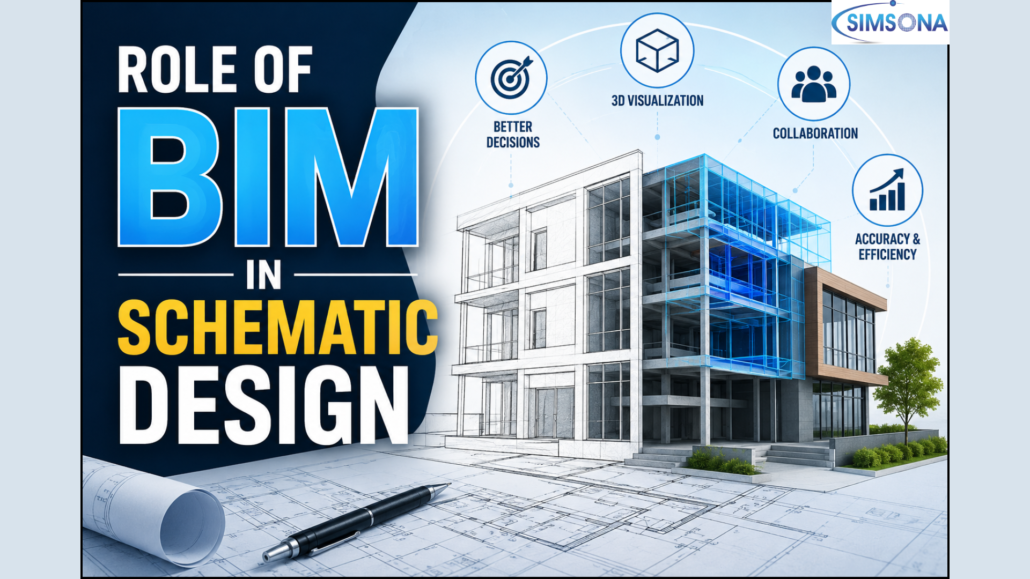
The construction and architecture industries have undergone a major digital transformation over the past two decades, and at the center of this shift lies Building Information Modeling (BIM). Once viewed primarily as a tool for detailed design and documentation, BIM has evolved into a strategic asset that influences every phase of a project lifecycle—especially schematic design.
Schematic design is the stage where ideas begin to take shape. Architects, engineers, and project stakeholders define the project vision, explore alternatives, and establish the building’s overall form, layout, and performance goals. Decisions made during this phase have a lasting impact on project cost, schedule, sustainability, and constructability.
Traditionally, schematic design relied heavily on sketches, 2D drawings, and conceptual models. While these methods encouraged creativity, they often created gaps in coordination, delayed feedback, and limited analytical capabilities. BIM changes this process by introducing intelligent, data-rich digital models that support informed decision-making from the very beginning.
Today, BIM is no longer just a drafting or modeling tool—it is a collaborative design environment that enables teams to visualize, analyze, and refine concepts before construction begins. Its role in schematic design has become increasingly important as projects grow more complex and stakeholder expectations continue to rise.
Understanding BIM and Schematic Design
Before examining BIM’s role, it is useful to understand what schematic design involves.
Schematic design is the early design phase where project goals are translated into preliminary concepts. During this stage, design teams typically focus on:
- Building massing and form.
- Spatial organization.
- Site planning.
- Preliminary structural and MEP considerations.
- Design feasibility.
- Client requirements and project objectives.
The primary goal is not to produce final construction documents but to establish a viable design direction.
BIM enhances this process by creating a digital model that combines geometry with information. Unlike traditional CAD drawings, BIM models contain embedded data related to dimensions, materials, performance, and building systems. This intelligent environment enables designers to evaluate concepts more effectively and collaborate more efficiently.
Improving Concept Development and Design Exploration
One of BIM’s most valuable contributions to schematic design is its ability to support rapid concept development.
Architects often explore multiple design alternatives before selecting a preferred solution. Traditional workflows may require redrawing plans or manually coordinating revisions, which consumes time and increases the risk of inconsistencies.
BIM simplifies this process by allowing designers to create and modify conceptual models dynamically. Changes made to one part of the model automatically update related views, sections, and schedules. This parametric capability enables teams to test different layouts, massing strategies, and design ideas without starting from scratch.
As a result, design exploration becomes faster and more flexible.
Instead of spending excessive time managing drawings, teams can focus on evaluating design quality and project outcomes. This supports a more iterative and creative design process where informed experimentation is encouraged.
For example, an architect designing a commercial office building can quickly compare several façade options or floor arrangements while maintaining coordination across the model.
Enhanced Visualization and Client Communication
Communicating design intent is often one of the biggest challenges during schematic design.
Clients and non-technical stakeholders may struggle to interpret 2D drawings and technical plans. Misunderstandings at this stage can lead to design revisions, delays, and dissatisfaction later in the project.
BIM significantly improves communication through advanced visualization.
Three-dimensional models provide a realistic representation of the proposed design, helping stakeholders understand:
- Building scale.
- Interior and exterior spaces.
- Material relationships.
- Site integration.
- User experience.
These visual models make design discussions more productive and transparent.
Instead of relying solely on abstract plans, project teams can conduct walkthroughs and present realistic perspectives that illustrate how the building will function and appear.
This capability strengthens client confidence and encourages earlier decision-making.
For developers and project owners, BIM visualization also supports marketing and stakeholder approvals by presenting concepts in a compelling and accessible format.
Strengthening Collaboration Across Disciplines
Schematic design involves input from multiple disciplines, including architecture, structural engineering, mechanical systems, and construction planning.
In traditional workflows, coordination often occurs through separate drawings and isolated communication channels. This fragmented approach can create information silos and lead to conflicting design decisions.
BIM addresses this challenge by creating a shared digital environment.
All project participants work with coordinated information, improving transparency and reducing misunderstandings. Rather than exchanging disconnected files, teams collaborate around a common model.
This collaborative approach offers several advantages:
- Faster coordination.
- Improved information accuracy.
- Reduced duplication of work.
- Better alignment of project goals.
Early interdisciplinary collaboration is particularly valuable because many project conflicts originate during conceptual planning.
For instance, a structural engineer may identify issues with column placement that affect architectural layouts, or an MEP consultant may suggest system routing considerations that influence ceiling heights. BIM allows these conversations to occur early, when design modifications are easier and less costly.
The result is a more integrated and coordinated design process.
Early Cost Estimation and Budget Control
Cost certainty is a major concern during schematic design.
Project owners need early insight into budget implications before committing to design decisions. However, traditional conceptual estimating often relies on rough assumptions and limited information.
BIM improves cost forecasting by linking design geometry with quantifiable data.
As the schematic model develops, teams can generate preliminary quantity takeoffs and material estimates directly from the model. This creates a stronger connection between design decisions and financial impact.
Early cost analysis enables stakeholders to:
- Compare design alternatives.
- Evaluate value-engineering opportunities.
- Maintain budget alignment.
- Reduce financial uncertainty.
For example, modifying floor area, façade systems, or structural configurations can immediately influence quantity estimates and associated costs.
This real-time feedback helps prevent situations where attractive design concepts later prove financially unrealistic.
By integrating cost awareness into schematic design, BIM supports better financial decision-making and minimizes redesign caused by budget overruns.
Supporting Design Analysis and Building Performance
Modern projects are expected to meet increasingly demanding performance standards.
Energy efficiency, occupant comfort, daylight access, and environmental impact are no longer secondary considerations—they are central design priorities.
BIM allows performance analysis to begin during schematic design rather than after major decisions have already been made.
Using BIM-based analytical tools, designers can assess:
- Solar exposure.
- Daylighting conditions.
- Energy performance.
- Ventilation strategies.
- Building orientation.
- Thermal behavior.
This early analysis enables teams to optimize building performance before designs become fixed.
For example, adjusting building orientation or window placement during schematic design can significantly improve energy efficiency and reduce operational costs.
Traditional methods often delayed these evaluations until later project stages, limiting opportunities for meaningful change.
BIM supports a more proactive design approach where performance considerations are embedded into conceptual development.
Reducing Design Risks Through Early Clash Detection
Clash detection is commonly associated with detailed coordination, but BIM’s benefits begin much earlier.
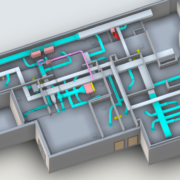
During schematic design, preliminary coordination models can reveal conflicts between architectural, structural, and building systems.
These may include:
- Spatial conflicts.
- Structural alignment problems.
- Mechanical routing limitations.
- Inadequate service zones.
Identifying such issues early reduces downstream design complications.
Traditional coordination methods frequently discovered conflicts during construction documentation or even during construction itself—when corrections became expensive and disruptive.
BIM enables teams to anticipate problems while design flexibility remains high.
Early clash awareness reduces project risk and contributes to smoother project delivery.
This preventive approach is especially valuable for complex facilities such as hospitals, airports, and mixed-use developments where system integration is highly demanding.
Encouraging Sustainable and Resilient Design
Sustainability is increasingly influencing design decisions across the built environment.
Regulatory requirements, environmental goals, and client expectations are pushing project teams to prioritize sustainable design strategies from the earliest stages.
BIM plays a significant role in this shift.
Because BIM models contain both geometry and performance-related information, they support sustainability analysis during schematic design.
Design teams can evaluate:
- Carbon impact.
- Material efficiency.
- Water usage strategies.
- Energy demand.
- Passive design opportunities.
This capability allows sustainability to become an active design driver rather than a late-stage compliance exercise.
BIM also contributes to long-term resilience planning by supporting informed decisions about building systems, operational efficiency, and lifecycle performance.
As climate-responsive design becomes increasingly important, BIM provides a practical framework for achieving sustainability objectives.
Challenges and Limitations of BIM in Schematic Design
Despite its advantages, BIM implementation during schematic design is not without challenges.
One common concern is the perception that BIM may constrain creativity.
Some designers worry that digital modeling encourages premature technical detail or limits conceptual freedom. However, this largely depends on workflow and software use. BIM should support creative exploration rather than replace it.
Another challenge involves investment and training.
Effective BIM adoption requires:
- Skilled personnel
- Software resources
- Process standardization
- Organizational commitment
Smaller firms may face barriers related to cost and expertise.
Interoperability can also create difficulties when different consultants use incompatible software platforms or data standards.
Additionally, developing BIM models too early or at excessive detail can reduce efficiency and create unnecessary workload.
Successful implementation therefore requires balanced modeling strategies aligned with project objectives.
The Future of BIM in Schematic Design
The role of BIM in schematic design continues to expand.
Emerging technologies are making BIM environments more intelligent and data-driven.
Several trends are shaping the future:
Generative Design
Algorithms can produce multiple design options based on defined goals such as area efficiency, daylight performance, or cost targets.
Artificial Intelligence
AI-assisted workflows can evaluate design alternatives and provide predictive insights that support decision-making.
Cloud Collaboration
Cloud-based BIM platforms enable distributed teams to collaborate in real time, improving communication and project accessibility.
Digital Twins
BIM models are increasingly evolving into digital twins that connect design data with operational performance throughout the building lifecycle.
These developments suggest that BIM will play an even greater strategic role during conceptual planning and early decision-making.
Rather than simply documenting design ideas, BIM is becoming a platform for generating, evaluating, and optimizing them.
Conclusion
Schematic design is where critical project decisions are made, and BIM has fundamentally transformed how those decisions are developed and evaluated.
By improving visualization, strengthening collaboration, enabling early cost and performance analysis, and reducing coordination risks, BIM creates a more informed and efficient design environment. It allows project teams to move beyond static drawings toward integrated, data-rich workflows that support better outcomes.
While challenges related to adoption, training, and process management remain, the benefits of BIM during schematic design are increasingly difficult to ignore.
As technology continues to evolve, BIM is poised to become not merely a design tool but a central decision-making framework for the future of architecture and construction. Firms that embrace BIM early in schematic design are better positioned to deliver projects that are innovative, coordinated, sustainable, and aligned with client expectations.
 301-774-0880